Reading Passage
 |
||||||||||||||||
 |
||||||||||||||||
 |
||||||||||||||||
 |
||||||||||||||||
|
||||||||||||||||
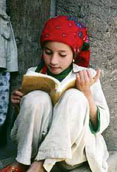
Literacy is the gift that keeps on giving
The ability to read and write touches every aspect of our lives in contemporary society. Imagine for a moment, how your life would be if you could not read or write even a simple sentence. How would your life be different? It is likely that you could not do the job you are doing now. Even if you operated a small agricultural or crafts business in a rural town, you would not be able to keep records on your inventory or be sure which customers owed you money. If you had to travel to a new area, it would be difficult to navigate your way in a place with unfamiliar landmarks and you would not be able to read street signs or words on maps. If you received a written message, you would need to depend on another, literate person to tell you its contents. And you would have to be sure that literate person was accurate and honest. Also, you would have no independent access to written information on health, news of the day, or opportunities in other places. In areas with a low level of literacy, statistics show a clear connection between illiteracy and poverty, poor health and the second class status of women. To bring attention to the importance of promoting literacy, back in 1966, UNESCO declared 8 September to be International World Literacy Day Over the years, World Literacy Day, has spawned a number of literacy-promoting initiatives,. The most recent is the “Global Alliance for Literacy” (GAL), begun in 2015. The GAL grew out of the Millennium Development Goals (especially MDG number 4: “Achieve Universal Primary Education ”) and also connects to the Sustainable Development Goals (SDG number 4: “Quality Education”). One way that GAL promotes literacy is by organizing contests to encourage the creation of innovative literacy programmes across the globe. A prize was awarded to Nguyen Quang Thach , who started the “Center for Knowledge Assistance and Community Development”, which constructed 7,000 village libraries in rural areas of his native Vietnam. Rural towns in many countries have either limited or no access to books and other written materials as they rarely have libraries. Another prize was awarded to a literacy training programme for villages of Kerala, India. The programme, called “Vocational Skill Development for Sustainable Development”, focused on boosting literacy in areas where local people could apply it to lift themselves and their communities socially and economically. One local person to benefit from such a programme in the Kerala village of Pathappiriyam ,was Bushra, a woman who ran a small crafts business. After taking training in the literacy programme, Bushra was able to keep records of materials and items bought and sold. As her business expanded, she was also able to provide jobs for two other women who had benefitted from the literacy programme. Such programmes have the power to change lives. And what has been the overall impact of these various efforts to promote literacy? In 1966, when World Literacy Day first began, just over half the world population was literate, with a rate of 56 per cent. In 2016, the overall world literacy rate has reached 83 per cent. Among young people, the literacy rate has become even higher: as of 2017, 91 per cent of young people between the ages of 15—24 are literate. However, despite the positive trend, more work needs to be done. As of 2017, 749 million of the world’s people remain illiterate, meaning they cannot write or read a simple sentence. The overwhelming majority (two thirds) of that number is women. The statistics above refer to overall averages: one must bear in mind that literacy rates in given countries range from the highest (100 per cent of the population) to the lowest (less than half the population). Questions: 2) What is the connection between the Global Alliance for Literacy and the MDGs and SDGs? 3) What has been the overall impact of the various international efforts to promote literacy? 4) Why do you think rural areas in developing countries often lack access to libraries and written information? Vocabulary Click to read an article about the "Post Decade for Literacy" |